
Some people are obsessed with their language, believing it carries the most complex and intellectual information, and only when other animals have learnt our languages and talk with us, they think they are ‘intelligent’. But actually, all the species have their own languages, and they all have complex intelligent and varied ways of communicating. Because Languages are just symbols, they have the information which be given. And information could be everything.
Translation Material
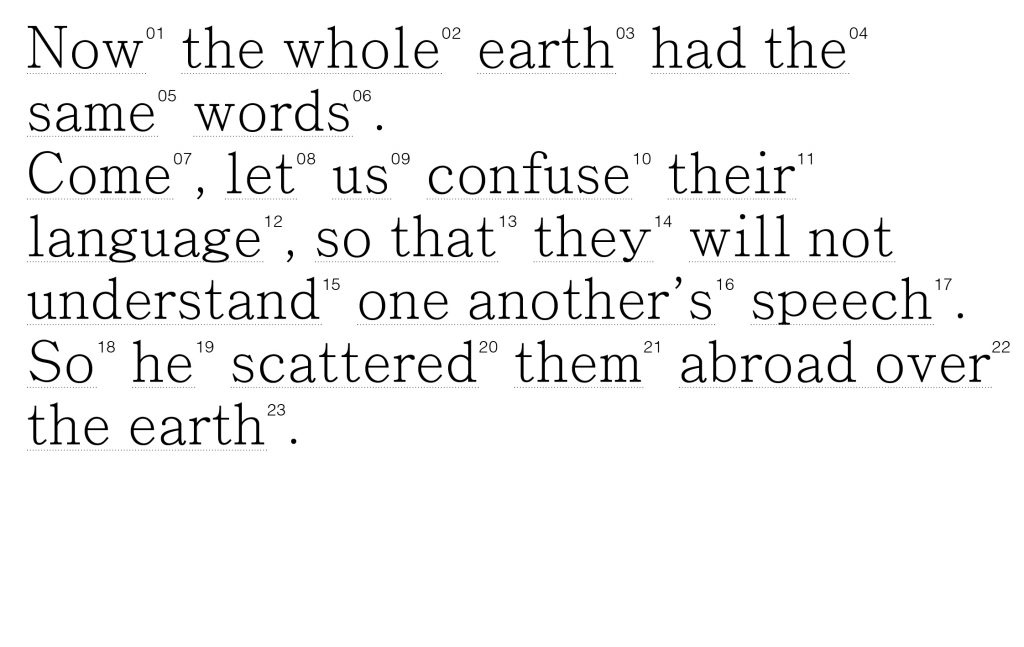
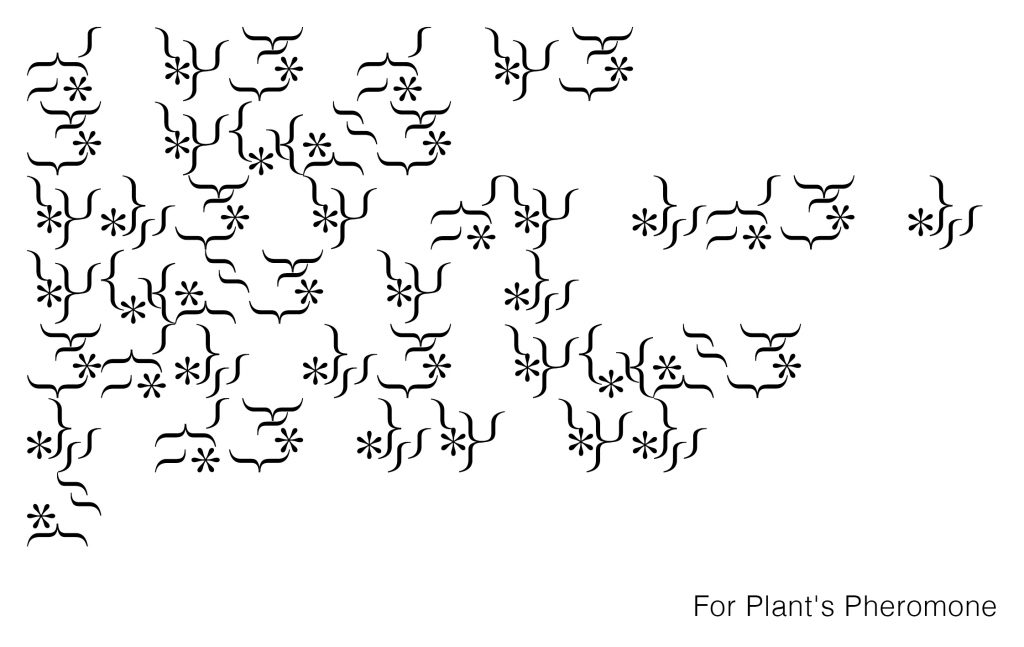
Now the whole earth had the same words. Come, let us confuse their language, so that they will not understand one another's speech. So he scattered them abroad over the earth.
                                                    ———— Tower of Babel
Echoing the content of the story, the world was initially just the same language, and the differentiation of the language stopped people from exploring the world. So i summarized these two translation modes that echo the content.
- “Confusing their language” → Deconstructing the symbols
- “Make they don’t understand” → Make the languages looks like a code, but it’s actually all the same
I try to blur and break the boundaries and forms of our language. To let people realise the language is only a fictional symbol, a form which carries the information. So all the following expressions are based on the deconstruction of the same content and the same words’ symbols.
* * * *
* * * *

Version 1: Coding Language for Plant’s Pheromone
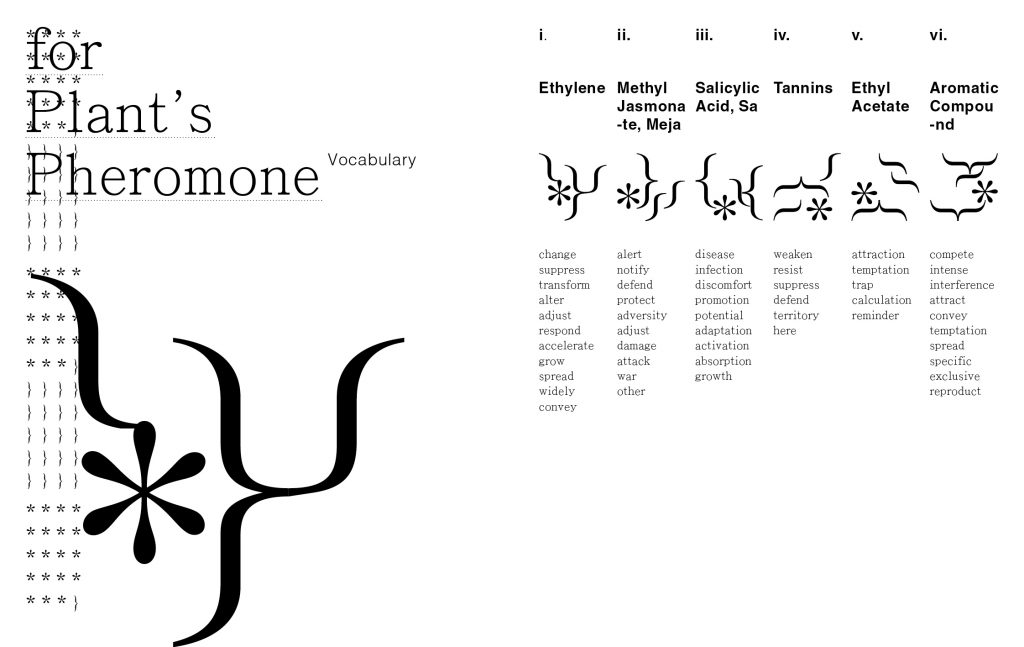
On the right I have listed the main ‘vocabulary’ of pheromones as a way for plants to communicate – the names of the six main pheromones and what they mean in plant communication.
I deconstructed and encoded the ‘vocabulary’ using the symbols on the left.
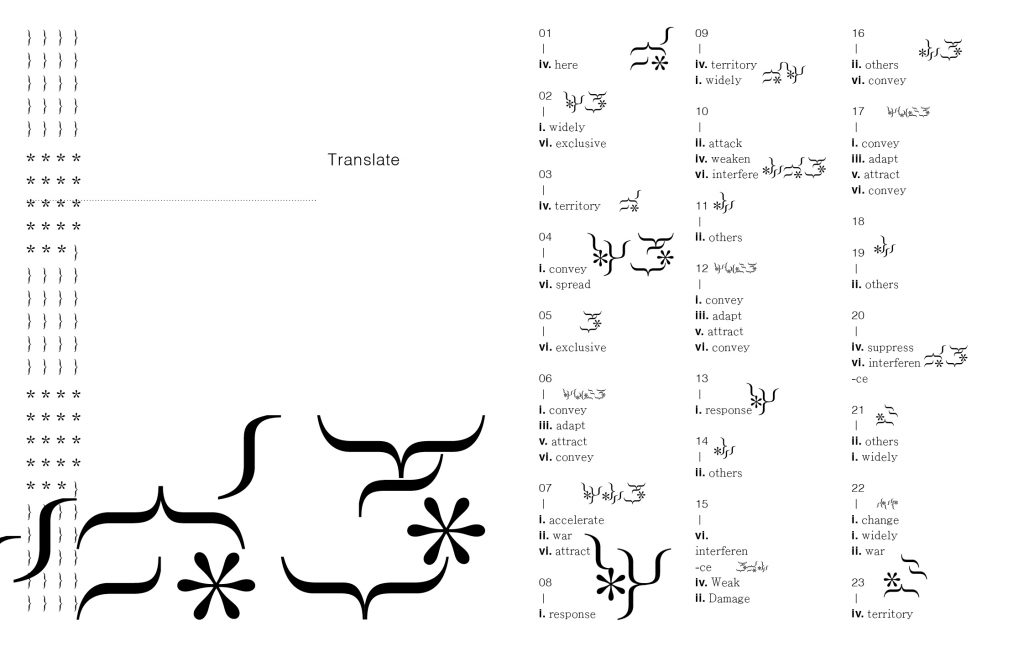
( ( ( (
))))
((((
))))
= = = =
=== =
= = = =
= = = =
+ + + +
++++
++++
++++
*
****
****
****
.
....
....
....
////
////
////
////
####
####
####
####
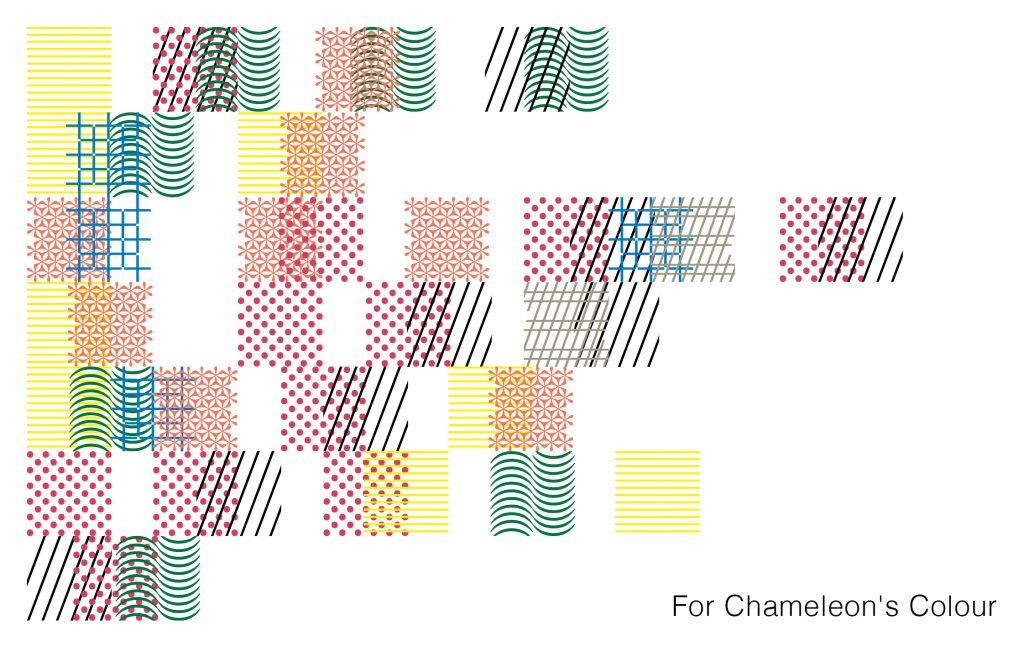
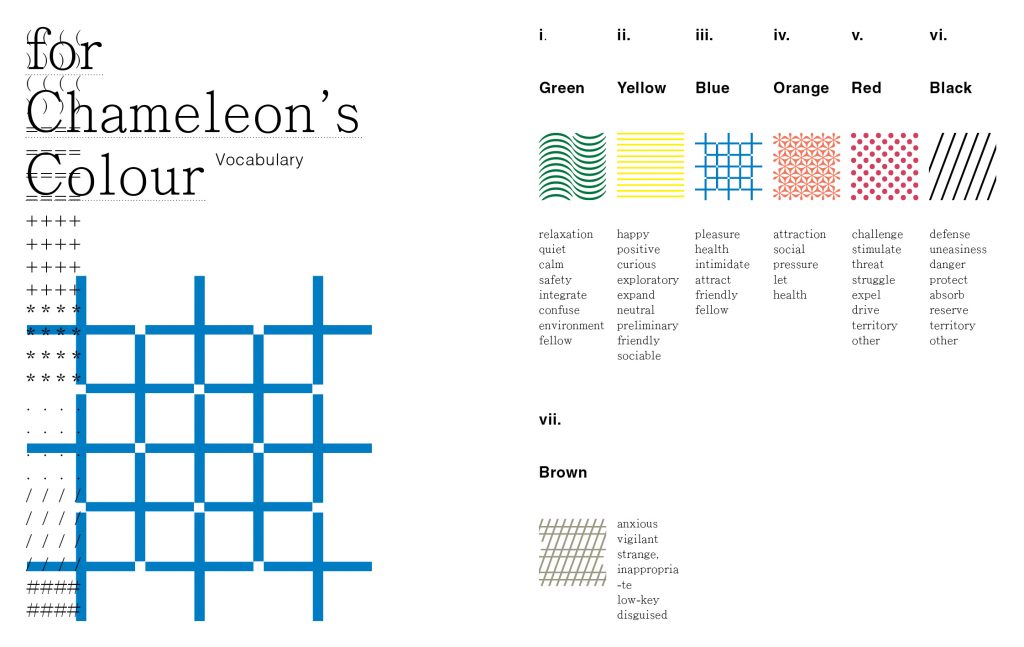
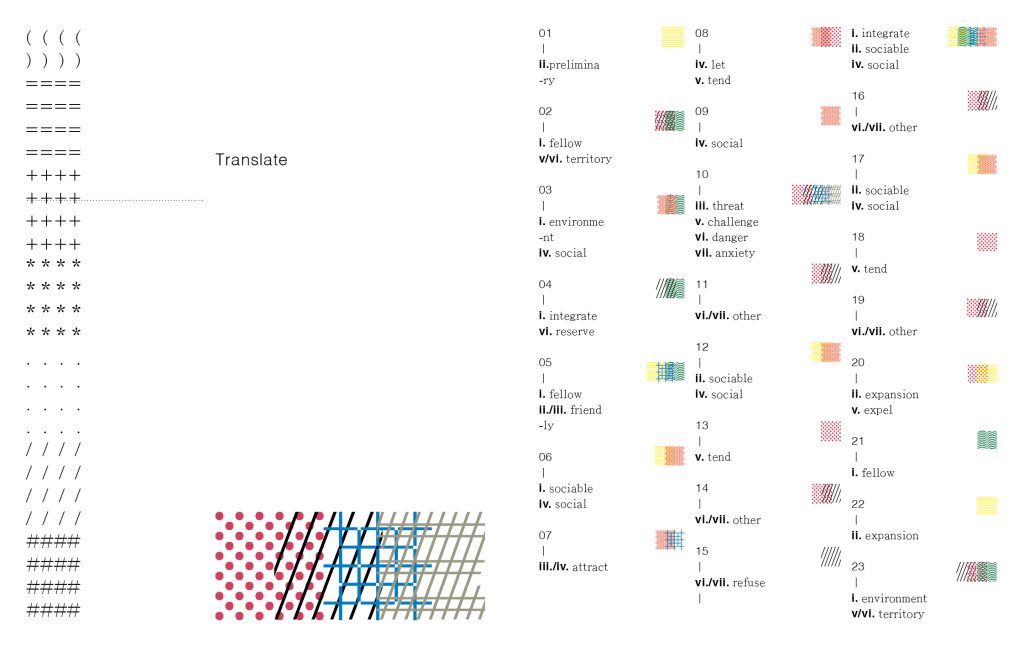
Version 2: Coding Languages for Chameleon’s Colour
Leave a Reply