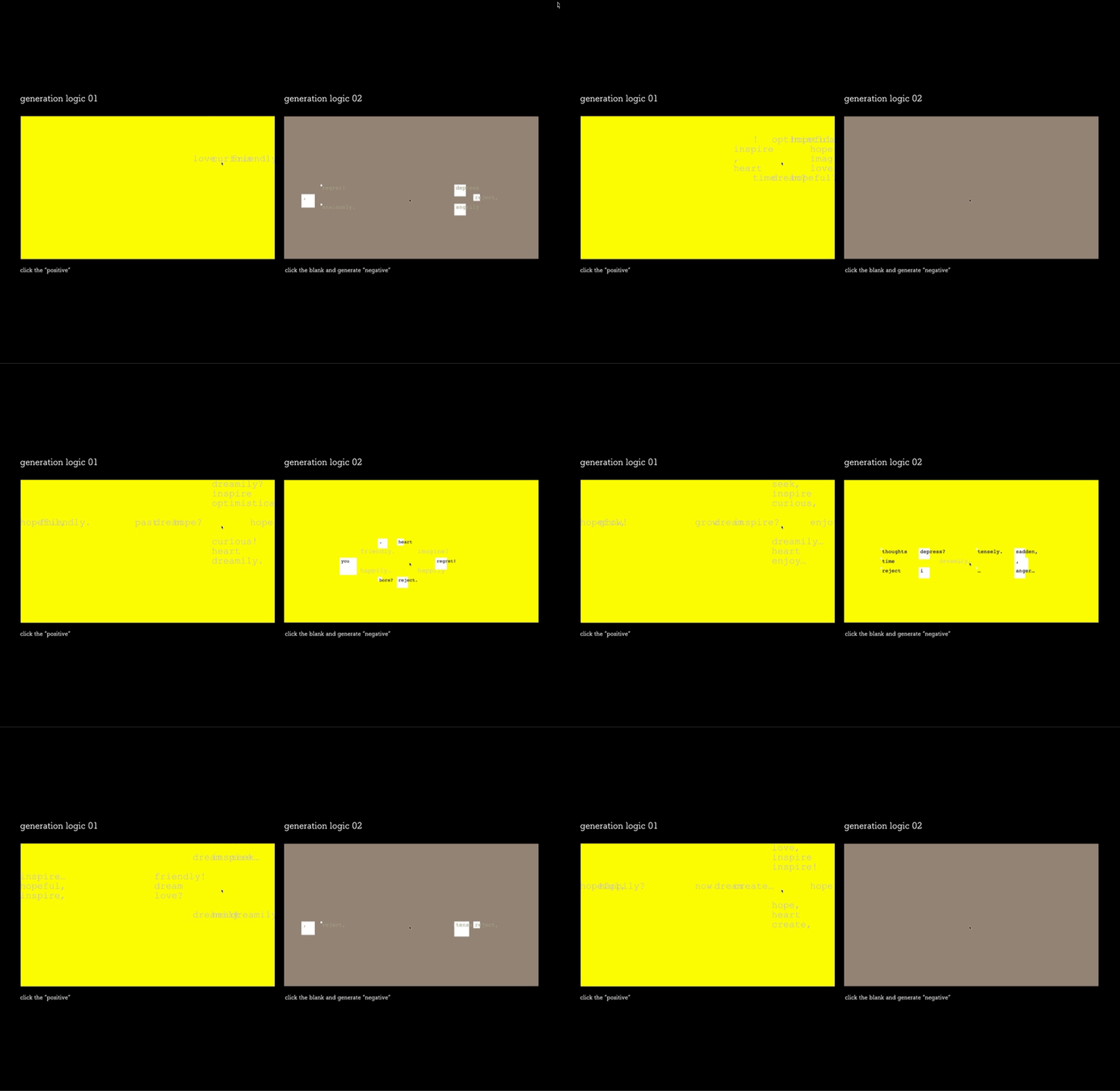
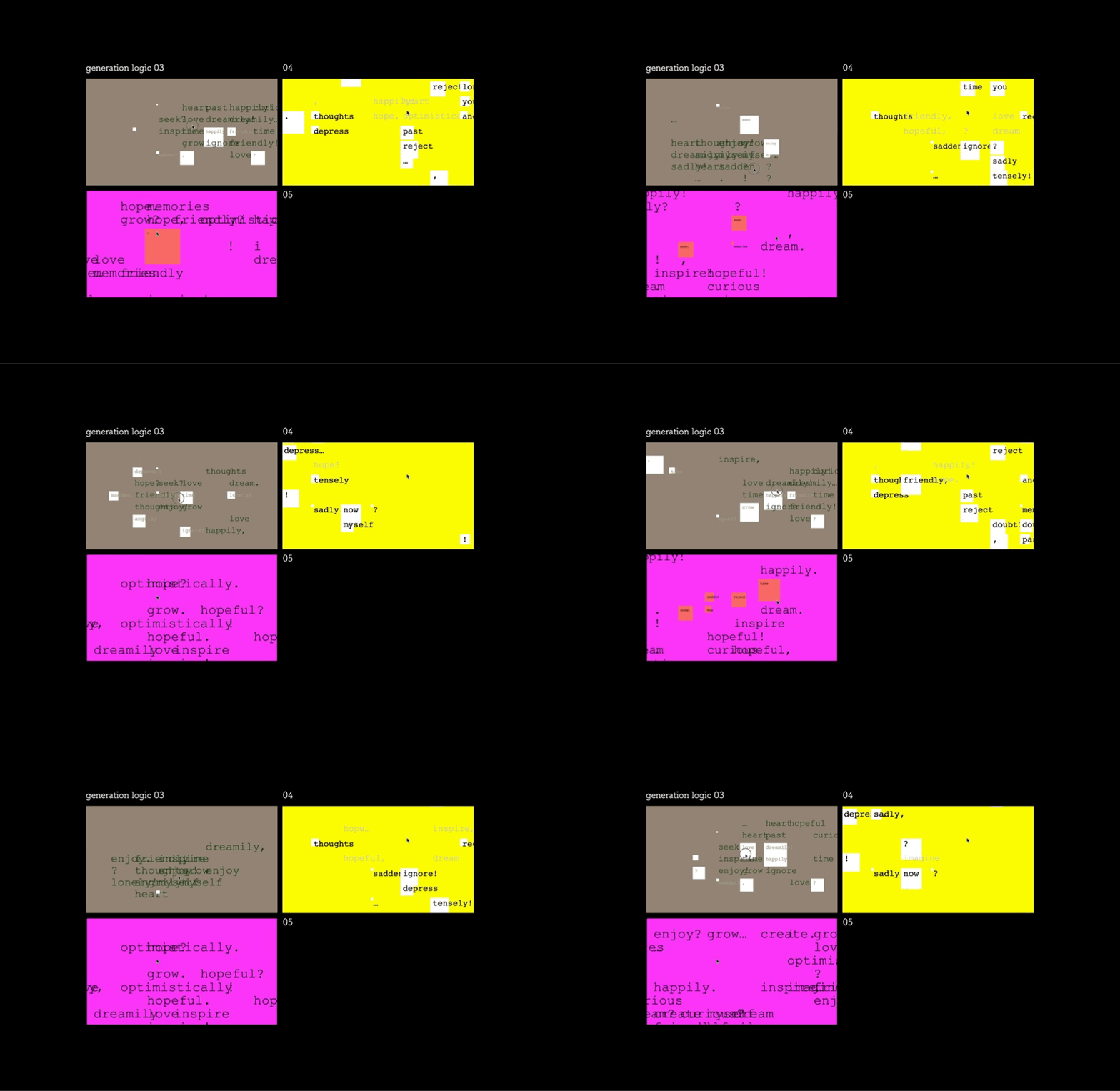
Based on the symbiosis and balances, juxtapositions and spreading between positive and negative emotions in human emotions, I designed several different code logics:
Logic 1
When the mouse clicks on an emotion, the current emotion will spread faster;
Logic 2
When the mouse clicks on a blank space, the opposite emotion of the current emotion will start to appear;
Logic 3/4/5
When the ratio between positive and negative emotions changes, three different background and text block colour ratios will be generated.
Logic 6
As the area of the positive emotion spreads, its proportion in the picture gradually increases, and the size of its typeface will expand, while the negative emotion thereby shrinks.
vocabulary Input
Subjects = ["heart","time","past","now","you","i"];
Objects = ["memories", "heart", "myself", "thoughts", "love"];
Punctuation = [“.",",","…","?","!"];
PositiveVerbs = ["love", "hope", "inspire", "grow", "curious","imagine", "dream", "create", "enjoy", "seek"];
PositiveAdverbs = ["hopeful", "optimistically", "dreamily", "friendly", "happily"];
NegativeVerbs = ["hate", "reject", "ignore", "regret", "doubt", "depress", "anger", "stop", "sadden", "bore"];
NegativeAdverbs = ["sadly", "lonely", "tensely", "anxiously", "angrily"];
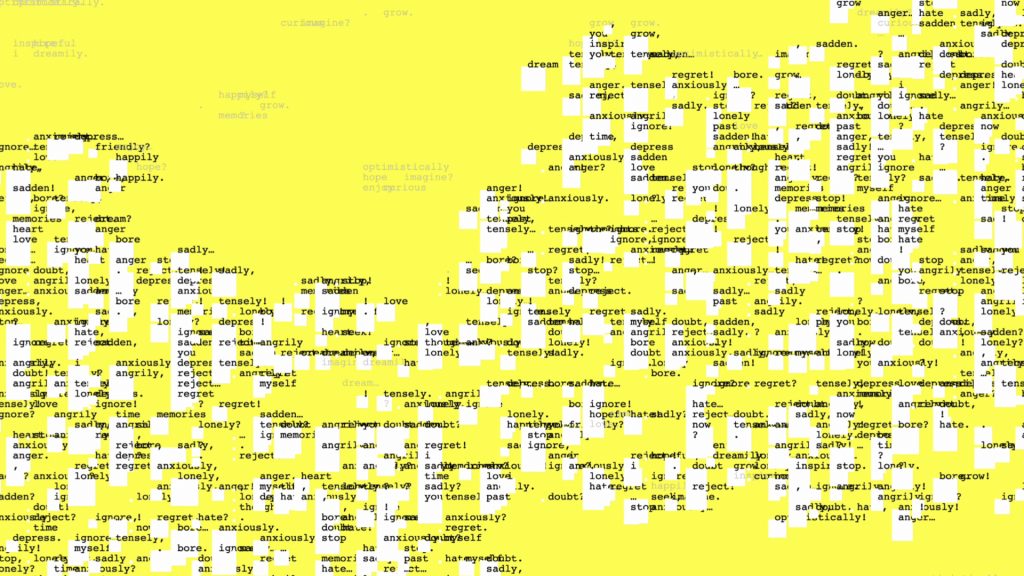
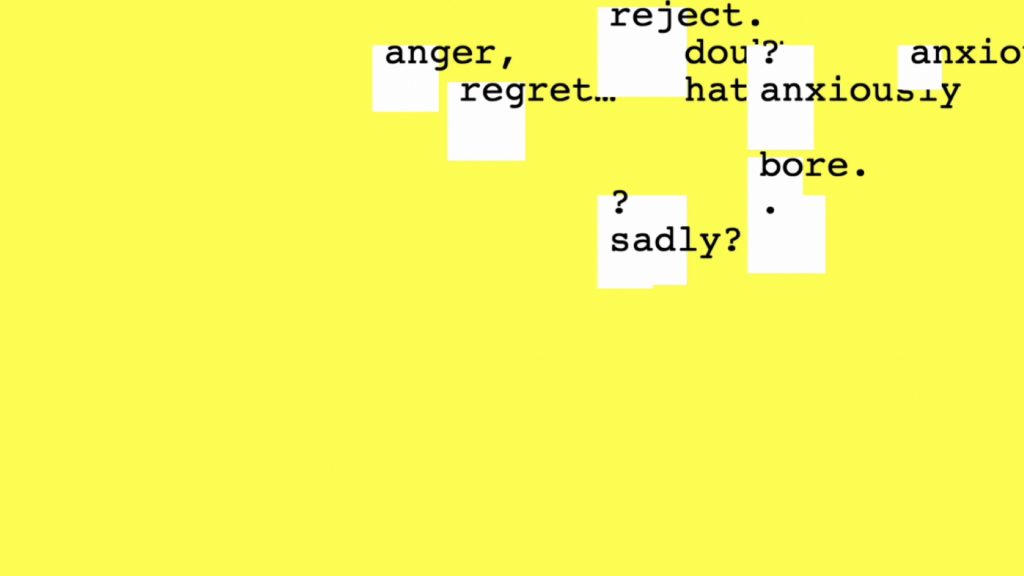
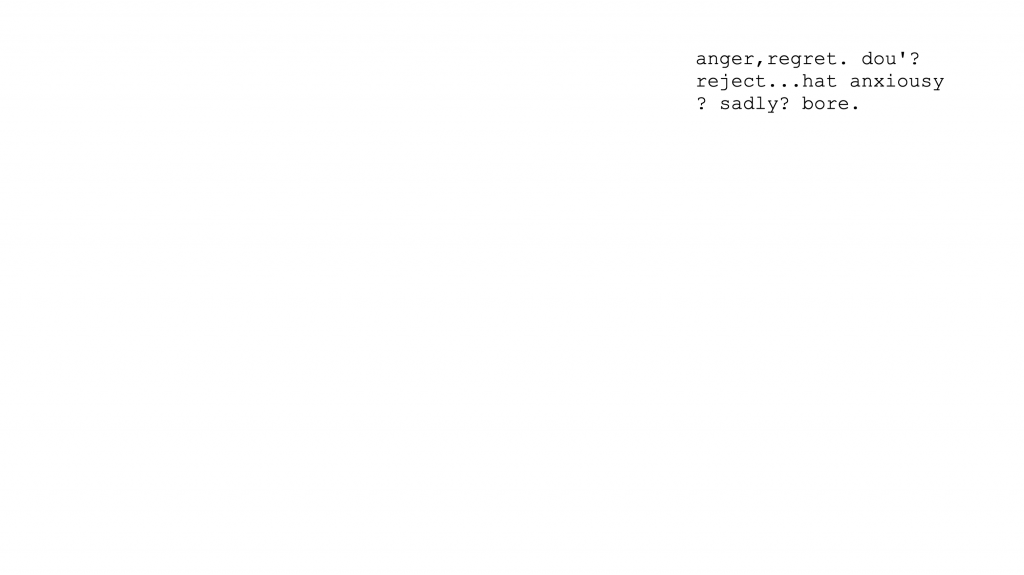
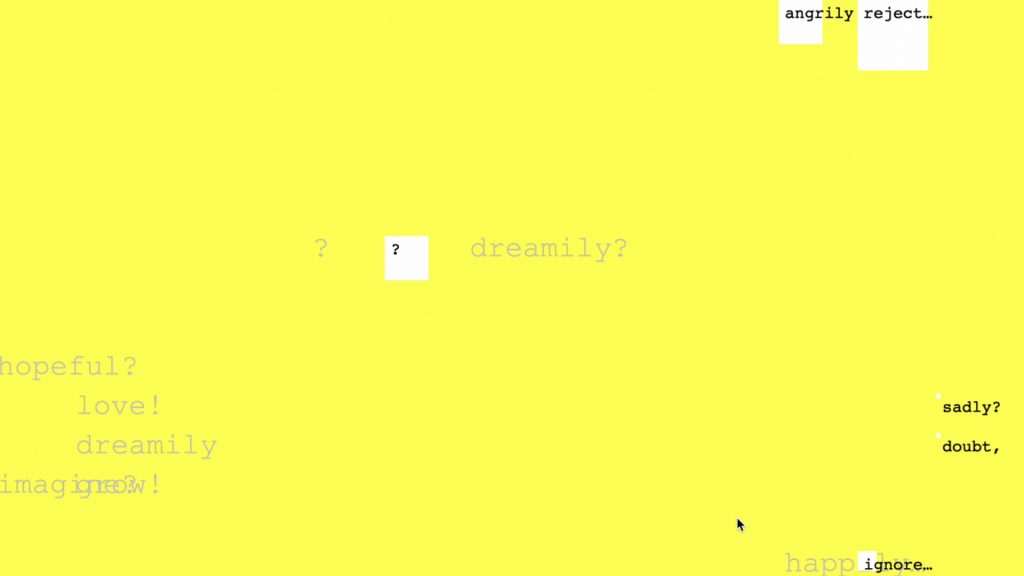
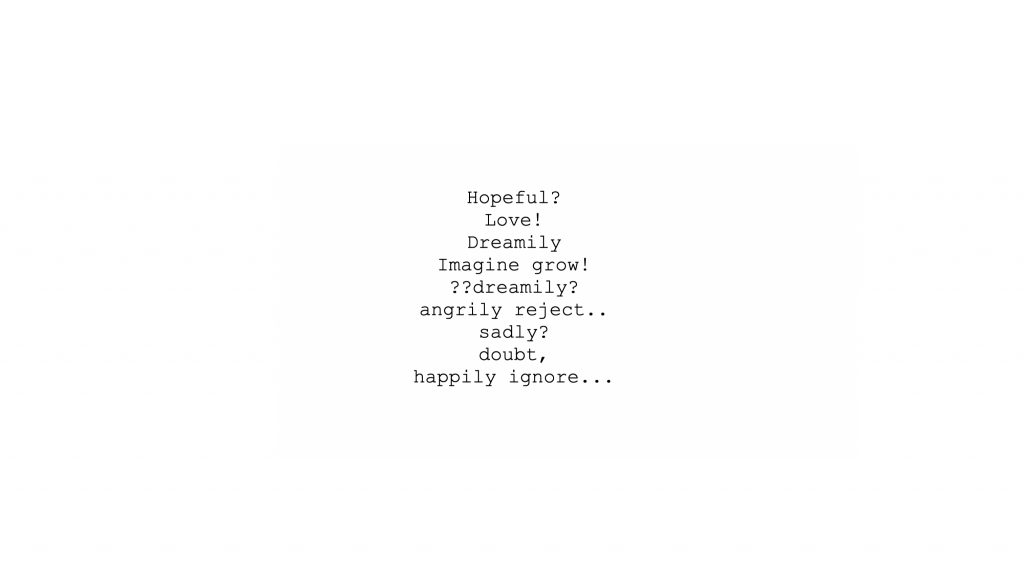
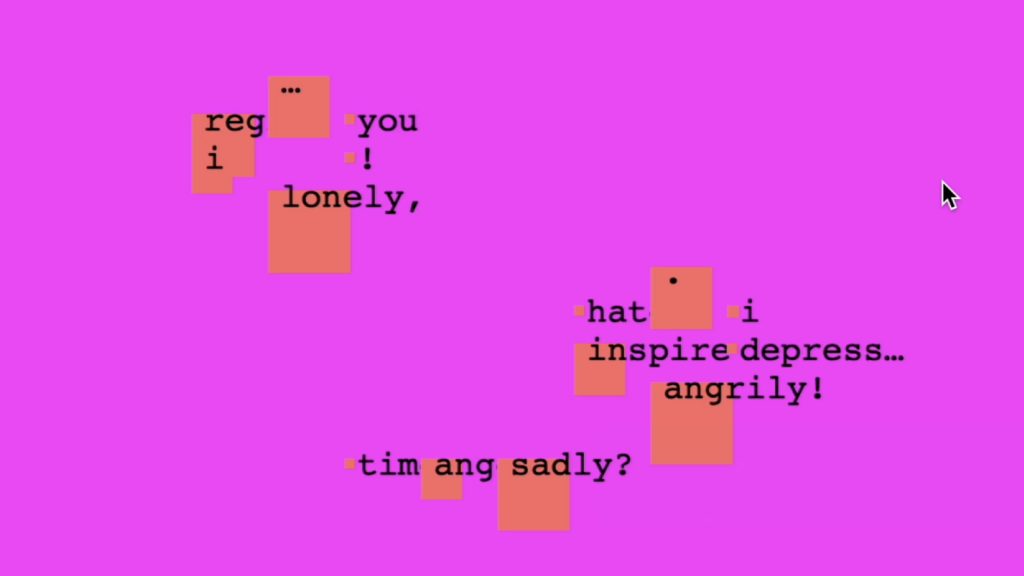
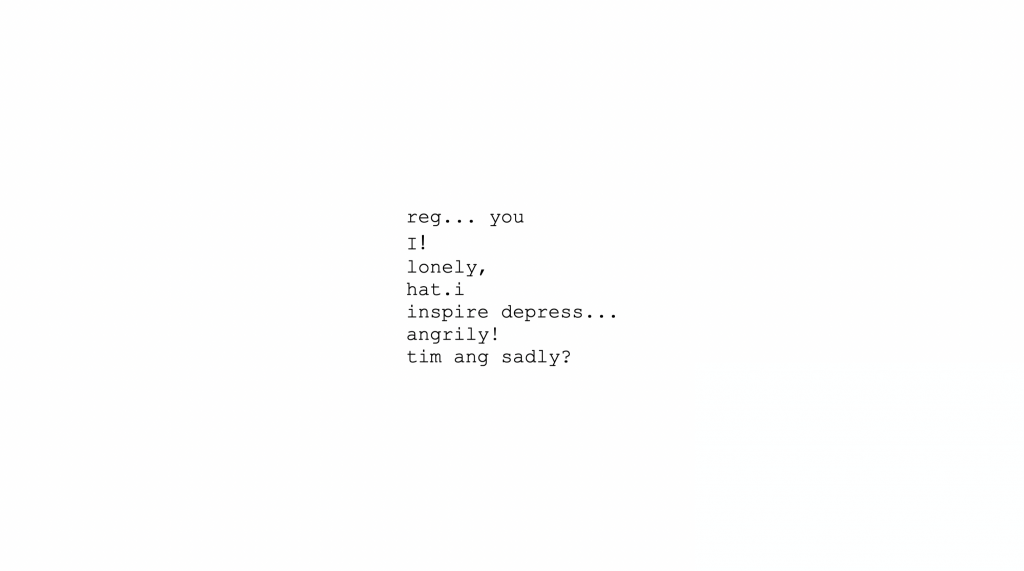
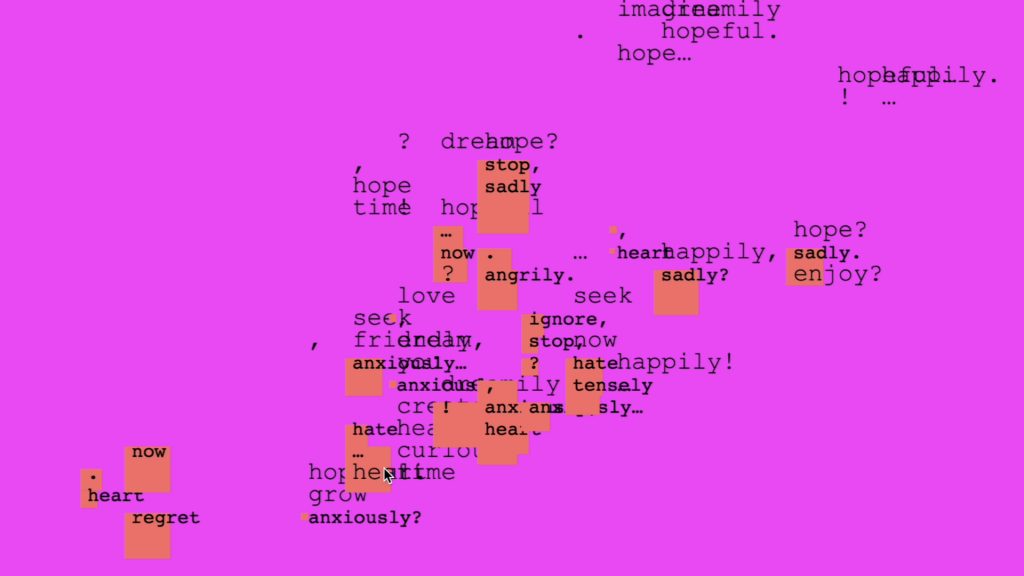
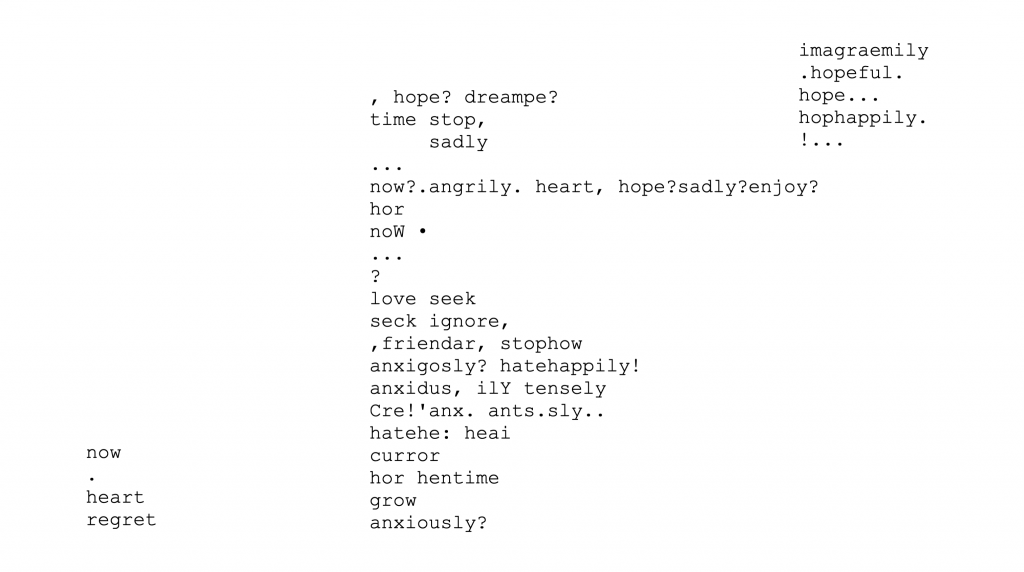
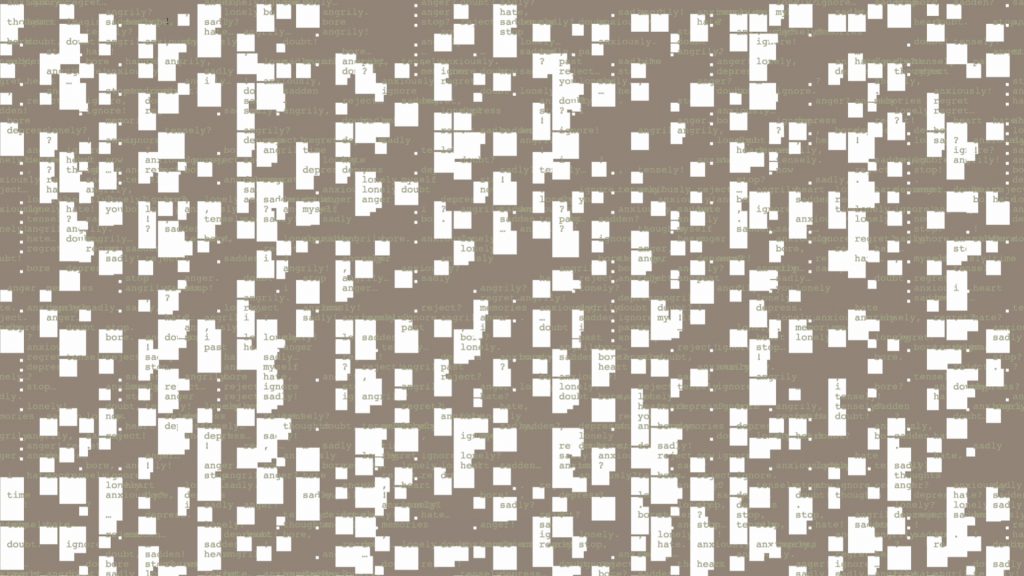
I designed a common word bank for subjects, objects and punctuations. The vocabulary for verbs and adverbs are devided into positive and negative respectively. As I entered these into the mood code, I started the code and clicked the words I preferred and allowed them to grow organically. For reading, I extracted the new poetries on the right.
Leave a Reply